

The Dictatorship of Corporate Jargon: How “Professional Speak” Paralyses Real Competence
There is a very specific, almost unspoken form of anxiety affecting individuals of unquestionable competence today. Seasoned practitioners, creative leaders with distinct visions, and consultants with fifteen years of hands-on experience frequently hesitate before drafting a proposal or publishing a piece of writing. The reason cited is almost always the same: they fear they do not sound “professional enough.”
This anxiety does not stem from a lack of expertise. It is the direct product of a ubiquitous dialect where credibility has been gradually confused with conformity, and clarity with institutional emptiness.
We have built a sanitized corporate language where one no longer helps a client, but rather “empowers stakeholders through transformative solutions.” Projects are no longer discussed; instead, we “facilitate cross-functional alignment on key deliverables.” This dialectic has nothing to do with technical precision: it is camouflage. It protects the speaker from the risk of clarity and the vulnerability of being understood.
The Hierarchy of Jargon: Language as a Social Gatekeeper
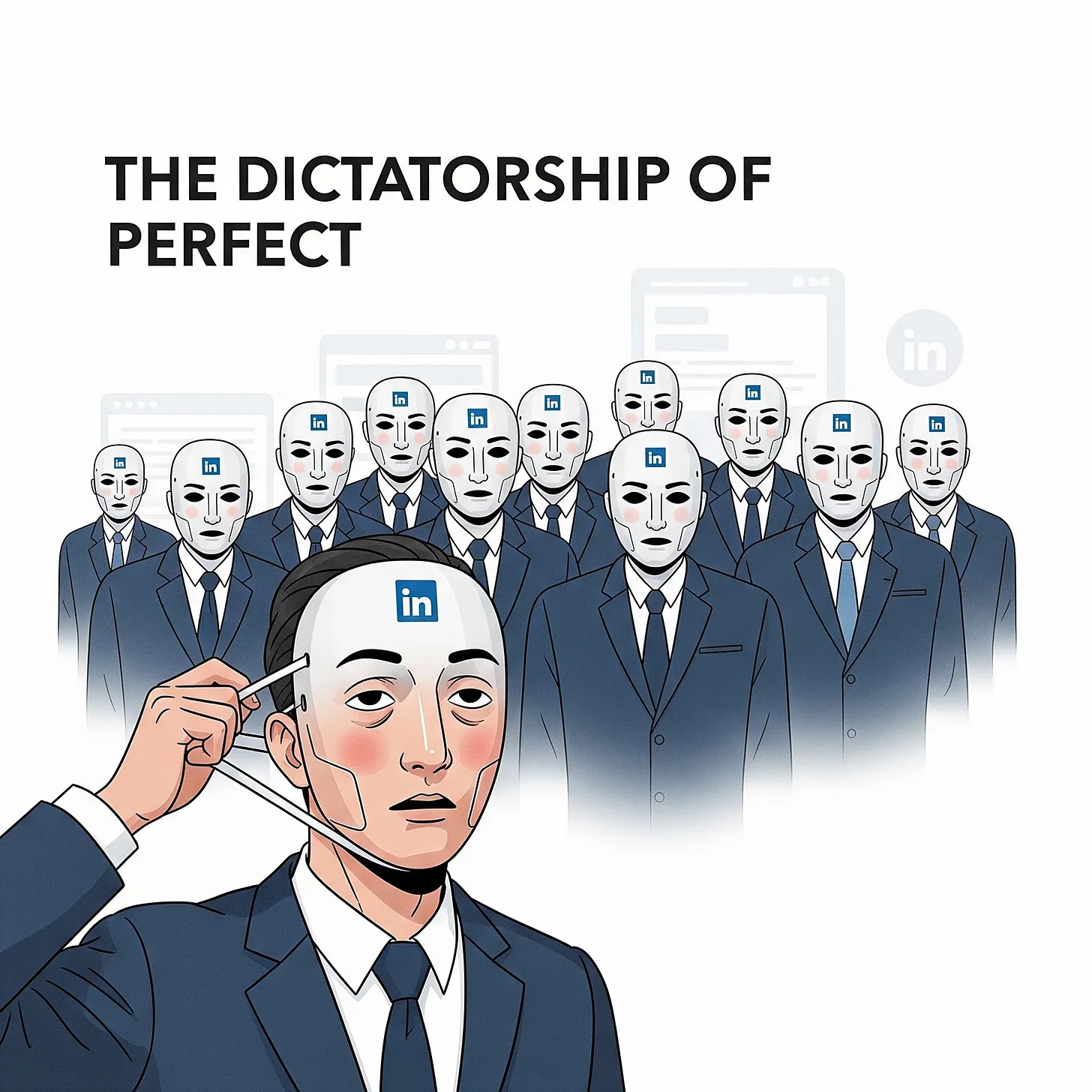
Corporate jargon does more than clutter communication: it establishes a social hierarchy based on the mastery of artificial codes. In much the same way that knowing which fork to use at a formal dinner once served as a class marker, the ability to maneuver terms like “leverage,” “optimization,” or “synergy” now acts as a professional gatekeeper.
This mechanism creates a damaging distortion within the market:
- Inhibition of Substantive Practitioners: Therapists, architects, or craftsmen whose value rests on listening or precision feel illegitimate because their work does not easily translate into “thought leadership” platitudes.
- Impunities for Empty Propositions: The less substance an offer possesses, the greater the incentive to wrap it in dense terminology. When there is nothing singular to articulate, performing the language becomes the ultimate shield.
- Audience Fatigue: Confronted with a continuous stream of polished, homogenized messaging, the public develops skepticism or, worse, self-doubt.
The implicit rule of this paradigm is severe: to speak simply is to lack strategic depth. It demands that professionals adopt a cardboard persona, lest they be dismissed as unsophisticated.
Professional Gaslighting: When Confusion Is Blamed on the Reader
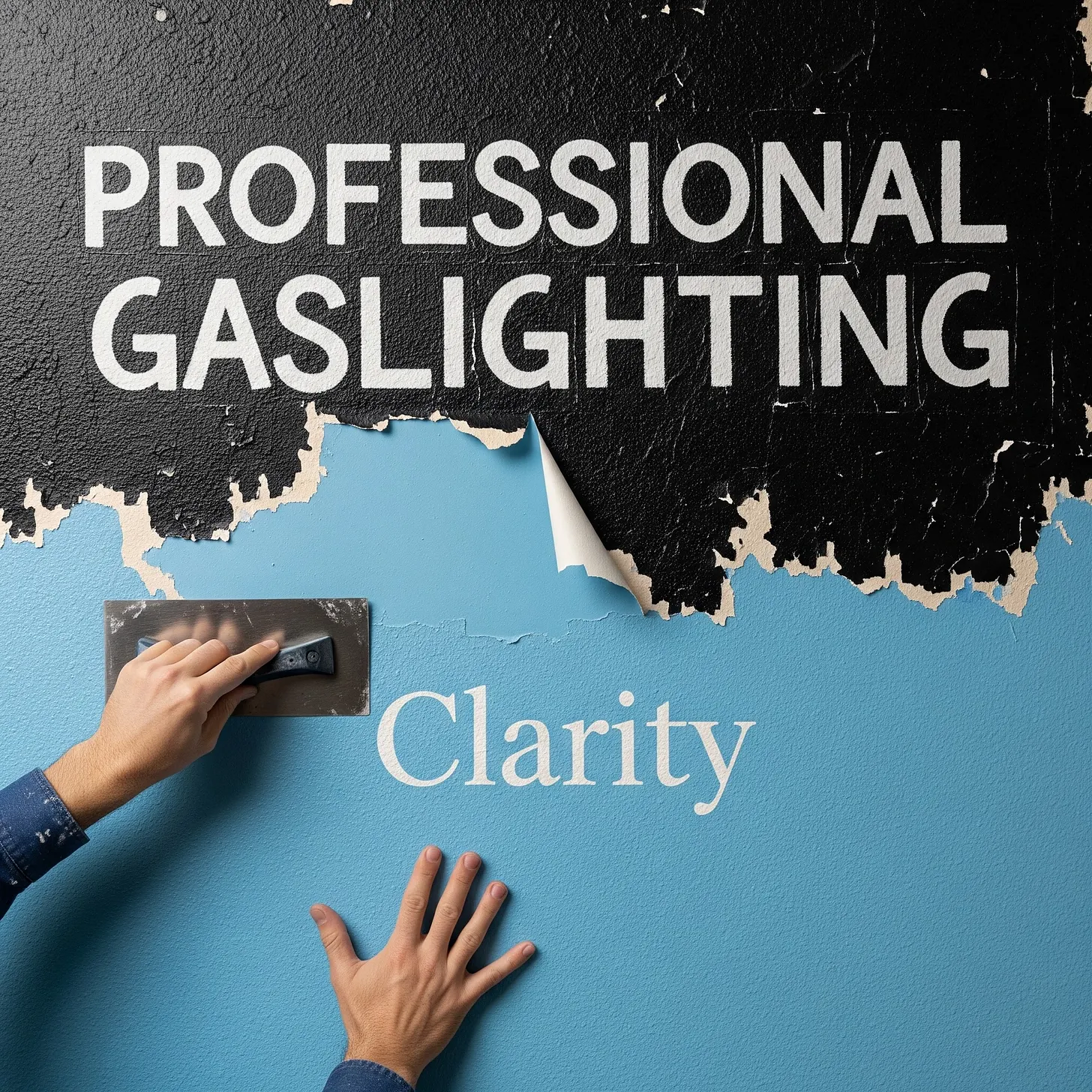
Complex corporate jargon operates as a firewall against reality. When a reader navigates a presentation dense with hollow phrasing and fails to grasp what the author actually delivers, the immediate reaction is rarely to call out the emptiness of the prose. The default reflex is to doubt one’s own comprehension: “I must not be senior enough to grasp this,” or “This framework is beyond my level.”
This inversion of responsibility traps the audience in two unproductive states:
- Paralyzed Retreat: The prospect steps back, convinced they lack the maturity to engage with the offer, leaving the field open to more aggressive, simplified promises.
- Diffuse Suspicion: The body senses a disconnect before the mind can articulate it. The offer feels obscure because it is unreadable, yet the obligation to appear “professional” prevents the reader from trusting their intuition.
In both instances, the author avoids what every practice requires: an honest, grounded evaluation of the work itself. As noted in The Sales Funnel That Hates Humans, replacing direct dialogue with jargon does not establish authority; it merely creates an insulating, sterile distance.
[ Jargon-Dense Narrative ] —> [ Masked Substance ] —> [ Reader Self-Doubt ] —> [ Sterile Distance ]
|
( Paralysis & Lost Connection )
|
[ Plain Language ] —> [ Clear Value Proposition ] —> [ Prospect Autonomy ] —> [ Sustainable Alignment ]
Clarity as an Act of Professional Dignity
Replacing jargon with clear, direct language is neither a compromise nor a lack of rigor. It is the precise opposite: proof of an expertise so well-grounded that it no longer requires decoration to exist.
The work of simplification demands strategic courage. Writing clearly about one’s practice forces answers to the questions jargon allows us to bypass: What do I actually deliver? For whom? And how does it tangibly alter the situation of those who hire me?
Once the habit of borrowing corporate phrasing is abandoned, the anxiety surrounding public narrative dissipates. The goal shifts from performing a posture of universal expertise to articulating the reality of a practice with precision. Clarity then becomes the highest form of professional respect and the foundation of enduring trust.
Unraveling Your Business Narrative
If you sense a disconnect between the true caliber of your work and how it is currently presented, the issue is rarely your ability to write. More often, it is an unexamined ambiguity at the core of your service architecture.
I work with independent professionals, creative directors, and consultants to strip away accumulated noise. Through a Strategic Audit, we evaluate your positioning and translate your core value into a clear, grounded, and authoritative narrative.
Before attempting to conform to dominant corporate templates, take the time to clarify the underlying structure of your message.
Studio updates, thoughtful articles about clarity and gentle marketing, and a few behind‑the‑scenes notes about my portrait projects. Sent once or twice a month.